Make Resident Information Actionable for Better Care

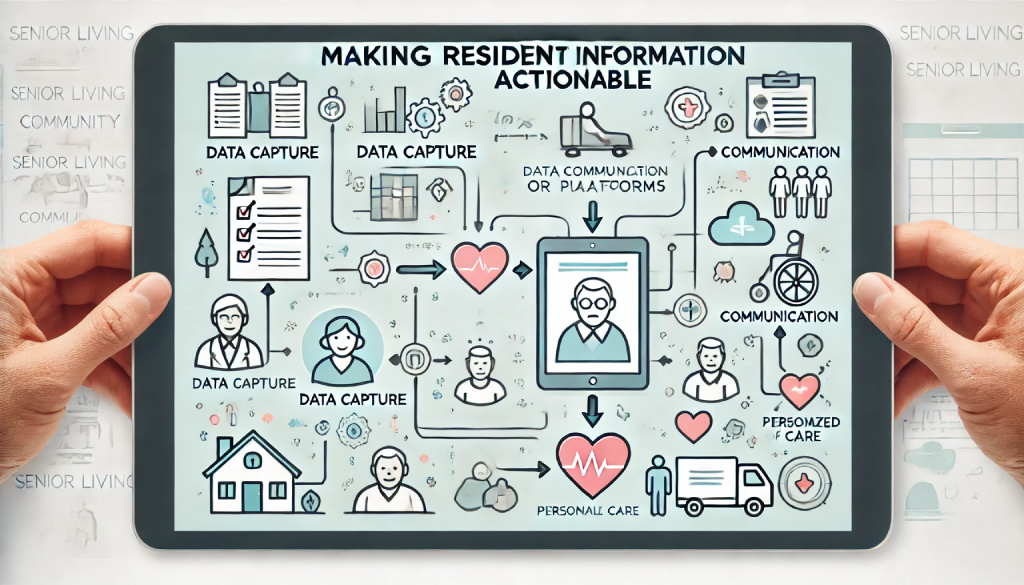
Most senior living communities have processes for capturing resident information during the move-in process, often through forms filled out by families. These forms detail important aspects of a resident’s needs, preferences, and dislikes, which are crucial for providing personalized care. However, many communities struggle to use this information effectively, leading to missed opportunities in improving care.

The Information Gap

While families provide valuable insights into their loved one’s preferences, the collected data is often filed away and not shared across caregiving teams. This lack of communication becomes especially problematic with frequent staff turnover. New staff members may be unaware of a resident’s specific needs, resulting in missed care opportunities and unmet expectations.

The Impact of Inaction

Failure to make resident information accessible can negatively impact both the quality of care and a community’s reputation. If families feel that their loved ones are not receiving the promised personalized care, it can lead to poor reviews, low satisfaction scores, and reduced marketability.

The Solution: Making Resident Information Actionable

To ensure high-quality care, communities need to ask:

  • How can we make it easier to collect and share resident information?
  • Can we ensure that this information is accessible to all caregivers, despite staff turnover?
  • How can we hold staff accountable for delivering personalized care?

Technology as a Game Changer

Technology can play a vital role in bridging the gap. A platform that captures and shares resident information with the entire caregiving team ensures that each staff member has what they need to provide personalized care, regardless of turnover. This makes the information actionable, ensuring promises to families are fulfilled.

Conclusion

The key to improving care in senior living communities is not just gathering resident information but making it actionable. With the right technology, communities can enhance care quality, improve operational efficiency, and maintain their reputation by consistently delivering personalized care to residents.

Sanvis Health is a Florida based technology company with a singular focus in helping senior living operators efficiently deliver personalized care for residents. The CareSynchrony® platform is a comprehensive, modular and fully integrated tech stack designed exclusively for senior living. Learn more.
Five Common Issues In Senior Living Communities & How To Avoid Them

Senior living communities can be great in so many ways: Seniors have a place where they can socialize with others, enjoy round-the-clock personal care, and still take advantage of the independence we all deserve – all while living in a comfortable, home-like setting. However, senior living communities also come with common issues that sometimes need to be solved if residents are to thrive. To that point, we’re going to take a look at some of the problems that often arise, as well as how they can be appropriately addressed.

Trouble Adjusting

Moving and changing your housing situation is stressful, regardless of how smoothly it goes in the moment. Once you’re in the new place, you have to actually set about adjusting to it. Everything is new, and particularly for those who may struggle with certain conditions (like Alzheimer’s or dementia), the adjustment can be even more difficult. There is nothing that can be done to eliminate the issue of seniors needing to adjust when moving into living communities. However, studies show that caregivers should consider social support for newer residents who are still getting used to their new surroundings, routines, and lives in general.

This support can be invaluable, and will help adjustments go more smoothly. And while specific efforts may vary depending on facilities and care conditions, Sanvis Health’s community engagement solutions  can make it easier for care teams to transition new residents to the community. These solutions consist of activity calendars, family portals and apps, digital signage, and voice enablement –– all of which can help with social support and general adjustment to a new environment.

Stress & Depression

Stress and depression are both extremely common in senior care communities, given that residents often feel isolated and alone. The pandemic hasn’t helped matters in this regard either; more residents are suffering from these conditions as a result of the fact that their families have been less able to visit due to health risks. While this comes from good intentions (wanting to avoid transmission of COVID-19 to vulnerable populations), it still leaves lots of residents dealing with the destructive issues of loneliness and depression. Staff members need to be aware of this so that they can put appropriate measures into place, such as incorporating more daily exercise into residents’ routines, encouraging social engagement, and even making sure that residents are getting the nutrition they need. Regarding social activity, the aforementioned community engagement solutions we provide at Sanvis Health can again be helpful. Additionally, for the sake of both social activity and nutrition, we’d recommend resident dining systems that assisted living facilities can implement to make it easier for residents to enjoy healthy meals together.

Adjustments like these can help to mitigate feelings of stress and depression, even if they don’t always tackle the root causes.

Resident Isolation & Elder Abuse

The issue of elder abuse is a complicated one, because there are many forms of abuse –– including physical, sexual, and emotional. Some of the most common but perhaps most “unintentional” forms of abuse, however, are neglect and isolation. There are many reasons why a resident may become isolated: The staff is overworked and can’t allocate adequate time; the staff may not believe a resident is able to participate in a given activity; family might not visit as much as they should. While these issues are rarely a given person’s fault or intention, they still need to be addressed.

How the issues are addressed will depend on specific cases. But there are some straightforward options for handling some of the common types of elder abuse just mentioned. Implementing structured health and wellness solutions, for instance, can mitigate instances in which the staff might mistakenly leave a resident out of certain activities. And the issue of some care staff being stretched thin and unable to provide attention can now be solved by the use of telehealth, which makes it easier for residents to get the attention they need (at least with regard to their health).

Understaffing & Quality of Care

There is a shortage of nurses in the U.S. in general, which is now clashing with the large population of baby boomers –– who are starting to join the ranks of residents in senior care facilities and communities. As a result, we’re seeing fewer nurses and caregivers relative to residents. Additionally, those nurses who do join the field tend to be overworked, and by no fault of their own, their work performance can slip. This can become evident in the care seen in senior living communities, unfortunately.

As more people join the nursing field, however, we should see higher quality care everywhere: in hospitals and clinics as well as in senior living communities. Assisted living facilities would do well to reach out to the growing number of nursing students who will be seeking work in the coming years, as well as to explore some of the aforementioned telehealth solutions for their residents. Provided budgets allow for it, providing adequate care –– both through nursing staff and remote conferencing options –– should be a top priority.

Security Issues Amid Adoption of New Technology

As senior living communities encourage the use of smart devices and other technologies in order to maintain safe environments –– and as tech helps seniors become more independent –– there is also the issue of security to consider. Devices such as tablet cameras, monitors, and others lend themselves to potential spying or other uncomfortable situations. Similarly, more data-oriented care opens the door to the potential digital exposure of residents’ information. Residents and staff alike need to be aware of these issues, and should work together to develop safeguards and protections. In particular, it is becoming necessary for staff to educate residents on some basic cybersecurity measures.

Senior living communities offer excellent ways to keep the elderly population healthy and independent, as well as provide them with peace of mind and safety. However, they’re not without their potential flaws. The issues discussed above are among the most common seen at senior living facilities, and while they can be problematic, there are also effective ways of dealing with them.

Written exclusively for SanvisHealth.com by Allie Cooper